Showing posts with label science. Show all posts

HOW TO UNBOIL AN EGG

Viputheshwar Sitaraman
Founder, Blogger
Draw Science.


Article: 
Yuan, T., Ormonde, C., Kudlacek, S., Kunche, S., Smith, J., Brown, W., Pugliese, K., Olsen, T., Iftikhar, M., Raston, C., & Weiss, G. (2015). Shear-Stress-Mediated Refolding of Proteins from Aggregates and Inclusion Bodies ChemBioChem DOI: 10.1002/cbic.201402427

MUCUS: IT'S SNOT WHAT YOU THINK


Emily Galloway
Thomas Crouzier
Founder
Connected Researchers

Viputheshwar Sitaraman
Founder, Blogger
Draw Science.


FigShare: 
Crouzier, Thomas; co, Julia (2014): Mucus, it's snot what you think. figshare. http://dx.doi.org/10.6084/m9.figshare.1277545

SPACE EXPLORATION 2.0

Viputheshwar Sitaraman
Founder, Blogger
Draw Science.


Article: 
Genta, G. (2014). Private space exploration: A new way for starting a spacefaring society? Acta Astronautica, 104 (2), 480-486 DOI: 10.1016/j.actaastro.2014.04.008

2014: THE YEAR IN SCIENCE

Viputheshwar Sitaraman
Founder, Blogger
Draw Science.


Article: 
Qiu, X., Wong, G., Audet, J., Bello, A., Fernando, L., Alimonti, J., Fausther-Bovendo, H., Wei, H., Aviles, J., Hiatt, E., Johnson, A., Morton, J., Swope, K., Bohorov, O., Bohorova, N., Goodman, C., Kim, D., Pauly, M., Velasco, J., Pettitt, J., Olinger, G., Whaley, K., Xu, B., Strong, J., Zeitlin, L., & Kobinger, G. (2014). Reversion of advanced Ebola virus disease in nonhuman primates with ZMapp Nature, 514 (7520), 47-53 DOI: 10.1038/nature13777[Full Text (PDF)]

Labbé, C., & Labbé, D. (2012). Duplicate and fake publications in the scientific literature: how many SCIgen papers in computer science? Scientometrics, 94 (1), 379-396 DOI: 10.1007/s11192-012-0781-y

S. W. Hawking (2014). Information Preservation and Weather Forecasting for Black Holes arXiv arXiv: 1401.5761v1

Obokata, H., Wakayama, T., Sasai, Y., Kojima, K., Vacanti, M., Niwa, H., Yamato, M., & Vacanti, C. (2014). Stimulus-triggered fate conversion of somatic cells into pluripotency Nature, 505 (7485), 641-647 DOI: 10.1038/nature12968

Bougher, S., Cravens, T., Grebowsky, J., & Luhmann, J. (2014). The Aeronomy of Mars: Characterization by MAVEN of the Upper Atmosphere Reservoir That Regulates Volatile Escape Space Science Reviews DOI: 10.1007/s11214-014-0053-7

Niu, Y., Shen, B., Cui, Y., Chen, Y., Wang, J., Wang, L., Kang, Y., Zhao, X., Si, W., Li, W., Xiang, A., Zhou, J., Guo, X., Bi, Y., Si, C., Hu, B., Dong, G., Wang, H., Zhou, Z., Li, T., Tan, T., Pu, X., Wang, F., Ji, S., Zhou, Q., Huang, X., Ji, W., & Sha, J. (2014). Generation of Gene-Modified Cynomolgus Monkey via Cas9/RNA-Mediated Gene Targeting in One-Cell Embryos Cell, 156 (4), 836-843 DOI: 10.1016/j.cell.2014.01.027

Quintana, E., Barclay, T., Raymond, S., Rowe, J., Bolmont, E., Caldwell, D., Howell, S., Kane, S., Huber, D., Crepp, J., Lissauer, J., Ciardi, D., Coughlin, J., Everett, M., Henze, C., Horch, E., Isaacson, H., Ford, E., Adams, F., Still, M., Hunter, R., Quarles, B., & Selsis, F. (2014). An Earth-Sized Planet in the Habitable Zone of a Cool Star Science, 344 (6181), 277-280 DOI: 10.1126/science.1249403

A.K. Geim, & K. S. Novoselov (2010). The rise and rise of graphene Nature Nanotechnology, 5 (11), 755-755 DOI: 10.1038/nnano.2010.224

MIND-CONTROLLED PROSTHETICS

Viputheshwar Sitaraman
Founder, Blogger
Draw Science.


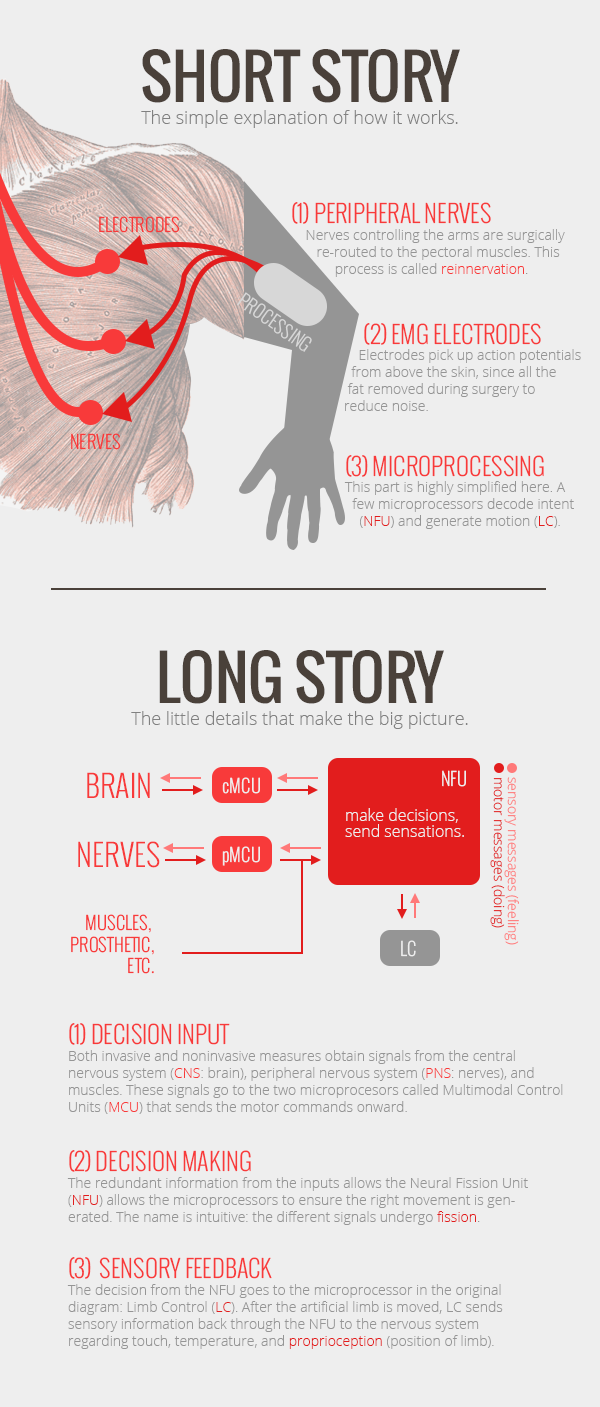
Article: 
Collinger, J., Wodlinger, B., Downey, J., Wang, W., Tyler-Kabara, E., Weber, D., McMorland, A., Velliste, M., Boninger, M., & Schwartz, A. (2013). High-performance neuroprosthetic control by an individual with tetraplegia The Lancet, 381 (9866), 557-564 DOI: 10.1016/S0140-6736(12)61816-9

AMNH PRESENTS: SHELF LIFE

Viputheshwar Sitaraman
Founder, Blogger
Draw Science.


The American Museum of Natural History recently created Shelf Life, an original series about the history and importance of scientific collections. They asked me to share the series with other science enthusiasts via social media, but after watching the video for the first episode, "33 Million Things," I couldn't resist talking a little more about what Shelf Life is. Read the infographic below to get a short preview of what you can see and learn from Shelf Life.


GRAPHENE IS THE NEW KEVLAR

Viputheshwar Sitaraman
Founder, Blogger
Draw Science.


Article: 
Lee, J., Loya, P., Lou, J., & Thomas, E. (2014). Dynamic mechanical behavior of multilayer graphene via supersonic projectile penetration Science, 346 (6213), 1092-1096 DOI: 10.1126/science.1258544 [Full Text (HTML)]

RESEARCH IS BROKEN...

Viputheshwar Sitaraman
Founder, Blogger
Draw Science.


Article: Alberts, B., Kirschner, M., Tilghman, S., & Varmus, H. (2014). Rescuing US biomedical research from its systemic flaws Proceedings of the National Academy of Sciences, 111 (16), 5773-5777 DOI: 10.1073/pnas.1404402111 [Full Text (HTML)]

...HOW TO FIX SCIENCE.

Viputheshwar Sitaraman
Founder, Blogger
Draw Science.


Article: Alberts, B., Kirschner, M., Tilghman, S., & Varmus, H. (2014). Rescuing US biomedical research from its systemic flaws Proceedings of the National Academy of Sciences, 111 (16), 5773-5777 DOI: 10.1073/pnas.1404402111 [Full Text (HTML)]

NOT-SO-GREEN MEN

Viputheshwar Sitaraman
Founder, Blogger
Draw Science.


Article: Lin, H., Abad, G., & Loeb, A. (2014). Detecting industrial pollution in the atmospheres of earth-like exoplanets The Astrophysical Journal, 792 (1) DOI: 10.1088/2041-8205/792/1/L7 [Full Text (PDF)]

TELEPATHY IS ALMOST HERE

Viputheshwar Sitaraman
Founder, Blogger
Draw Science.


Article: Grau C, Ginhoux R, Riera A, Nguyen TL, Chauvat H, Berg M, Amengual JL, Pascual-Leone A, & Ruffini G (2014). Conscious Brain-to-Brain Communication in Humans Using Non-Invasive Technologies. PloS one, 9 (8) PMID: 25137064 [Full Text (HTML)]

Suggested By: Adithya Nott

E-CIGS AREN'T SAFE

Viputheshwar Sitaraman
Founder, Blogger
Draw Science.


Article: Grana, R., Benowitz, N., & Glantz, S. (2014). E-Cigarettes: A Scientific Review Circulation, 129 (19), 1972-1986 DOI: 10.1161/​CIRCULATIONAHA.114.007667 [Full Text (PDF)]

Suggested By: Adithya Nott

HIGH SUGAR AND PLANTS

Viputheshwar Sitaraman
Founder, Blogger
Draw Science.


Article: Wang L, Waltenberger B, Pferschy-Wenzig EM, Blunder M, Liu X, Malainer C, Blazevic T, Schwaiger S, Rollinger JM, Heiss EH, Schuster D, Kopp B, Bauer R, Stuppner H, Dirsch VM, & Atanasov AG (2014). Natural product agonists of peroxisome proliferator-activated receptor gamma (PPARγ): a review. Biochemical pharmacology PMID: 25083916 [Full Text (HTML)]

Suggested By: Dr. Atanas G. Atanasov.
                              Principal Investigator 
                              Department of Pharmacognosy, Vienna
                              http://www.ncbi.nlm.nih.gov/pubmed/25083916

WE NEED #LABSELFIE.

Viputheshwar Sitaraman
Founder, Blogger
Draw Science.


For some reason, it seems scientists feel they’re too good for social media. Apparently, the traditional dogmatic, restricted, and expensive dissemination of research via academic journals is far superior to the hyper-efficient, rapid, and completely free spread of knowledge via social media. Apparently, burying a new research article amongst hundreds of issues of one among thousands of journals in one among millions of scientific fields generates more attention than broadcasting it right to the smartphones, tablets and computers of millions of interested viewers. Apparently, half-heartedly lecturing a half-empty, half-asleep classroom at a university is more fulfilling than the +1's and likes of countless people worldwide who truly share the same passion for science. Dogma in science: case in point
.

Why don’t scientists use
social media?

Before I continue, I must clarify that I do not presume that all scientists don’t use social media. Some use it extensively and effectively to diffuse their ideas. However, the great majority don’t. Most believe either (a) they don't have the time for social media or (b) that social media isn't meant for science communication. Neither of these excuses check out, and here’s why:

Social media is the future of all
communication—including science.

The Internet was promised to be a hub of information, but the laws of entropy and the sheer force of human creativity soon transformed it into a disorganized cloud of senseless bytes. In the middle of all the information, it was impossible to distinguish the good from the bad. That’s where social media came in. Social media turned the Internet from an anarchy into a democracy, giving people the ability to like, follow, subscribe, +1, retweet, favorite, etc. the most useful and interesting media, allowing popular vote to determine what dominated the Internet.

Social media isn’t entertainment,
it’s a highly precise tool.

Accordingly, social media isn’t strictly for self-centered teenagers taking “selfies.” It’s for all kinds of selfies: bathroom selfies and presidential selfies, cute outfit selfies and Oscar selfies, selfie-stick selfies and even (gasp) lab selfies. Yes, lab selfies.

Today, I want to initiate a new tradition: #labselfie. To most scientists this will be shocking even scandalous trend: bringing the filth of popular culture into the sterile and pristine laboratory setting. Nevertheless, the lab selfie is a deceivingly simple, but promisingly effective solution to the communication gap between science and society. 

We scientists tend to cocoon ourselves in little niches of research. In many senses, we’re much like the Amazonian tribe that just made contact with the outside world. We speak a language that seems totally foreign, play with suspicious chemicals, wear odd and showy garments, and often live almost completely separate from the rest of society. Today, our tribe meets the rest of the world. Instead of speaking our jargon-filled language, we will use the universal mode of communication: the hashtag. 

By simplifying science, we
can bring science to the world.

The numbers tell the story: lab selfies will probably get you far more attention than anything you’ve published so far. A research paper might garner around 1 million views. A Facebook post can easily top 500 million views (Bik and Goldstein, 2013). In the light of the rise of crowdfunded research, this statistic is even more relevant.

The time has come to move science to social media. Let’s bring innovation to the public. To kick it off, here’s my first #labselfie:


GLASSES-FREE COMPUTERS

Viputheshwar Sitaraman
Founder, Blogger
Draw Science.


Article: Huang, F., Wetzstein, G., Barsky, B., & Raskar, R. (2014). Eyeglasses-free display ACM Transactions on Graphics, 33 (4), 1-12 DOI: 10.1145/2601097.2601122 [Full Text (PDF)]

Suggested By: Adithya Nott

PARASITE CURES CANCER

Viputheshwar Sitaraman
Founder, Blogger
Draw Science.


Article: Baird, J., Fox, B., Sanders, K., Lizotte, P., Cubillos-Ruiz, J., Scarlett, U., Rutkowski, M., Conejo-Garcia, J., Fiering, S., & Bzik, D. (2013). Avirulent Toxoplasma gondii Generates Therapeutic Antitumor Immunity by Reversing Immunosuppression in the Ovarian Cancer Microenvironment Cancer Research, 73 (13), 3842-3851 DOI: 10.1158/0008-5472.CAN-12-1974 [Full Text (PDF)]

Suggested By: Adithya Nott

HOTTER, SMARTER, BETTER BRAINS.

Viputheshwar Sitaraman
Founder, Blogger
Draw Science.


Articles:
James F. Gillooly (2013). Hotter is Smarter: The temperature-dependence of brain size in vertebrates PeerJ : 10.7287/peerj.preprints.155v1 [Full Text (PDF)]
Wright KP Jr, Hull JT, & Czeisler CA (2002). Relationship between alertness, performance, and body temperature in humans. American journal of physiology. Regulatory, integrative and comparative physiology, 283 (6) PMID: 12388468 [Full Text (PDF)]

Got an idea? Tell me.

-

Name

Email *

Message *